

On the NYTimes’ Podcast “Bad Bunny’s Halftime Show: Our Instant Reactions,” Joe Caramanica and Joe Coscarelli, from a perspective of being informed about Puerto Rico and reggaeton, substantively discussed the show’s symbolism. My revisiting the show so soon, however, was not a good idea. Like the record number of viewers, I tuned in to see Bad Bunny counter right-wing hysteria, a mission accomplished spectacularly. Pleased, I didn’t want to have to react to problematic cultural issues that the podcasters surely didn’t know they were raising and that I couldn’t keep in abeyance very long. My problem began when Caramanica simply reminded us of the show’s opening scene, jíbaros in iconic pava hats cutting sugar cane, which he interpreted as Bad Bunny’s expression of pride in “Puerto Rico’s history.”
The scene projected the white criollo cultural history descended from the romanticized jíbaro, the foundational narrative I’d heard all my life even though actual history was more complicated. Poverty did push jíbaros to cut cane, especially after slavery. However, interior hilltop jíbaros are chiefly remembered as dirt-poor farmers. Coastal black boricuas also historically cut the cane. Everybody knows, but criollo island identity provides a mechanism for glossing over cultural, especially racial, nodes, offering a sort of placebo transracialism: acknowledging by adoption or appropriation without elaboration. On the island, African-rooted song and dance performed by a white ensemble tacitly become criollo cultural tradition. Everybody knows its origin. Also glossed over is the known fact that popular Puerto Rican music amounts to a history of striving to keep the culture racially honest. That lesson criollo culture accepts but, except for social scientists, puts on the backburner. To illustrate, even though we associate Bad Bunny with reggaeton, that racial lesson was superseded by the showcased criollo cultural purview.
The show’s island racial ambiguity pushed my buttons because it’s also an undercurrent of the miscommunication between the island and the mainland community, which was demonstrated in the show’s selective acknowledgment of the post-WWII diaspora (“West Side Story”) as a cultural outer province. “Nuevayol” was represented by Toñita’s Social Club in Brooklyn, an institution of the post-WWII migration’s first generation, which originally planted island criollo culture. That Nuevayol fades, replaced by a fissure that began with post-second generations, partly owing to classism, to mainland-island rivalry, to the mainlander’s loss of Spanish, but also–Do you really want to go there?–over the Caribbean bugaboo, race, or more specifically, over the willingness to make it plain: language most publicly demarcates the island from that younger Nuevayol, but as significantly does the mainland’s explicitness about race. Where the island’s racial consciousness is more nuanced latino, also affected by socio-economic standing, the mainland overcorrects with a Latino or unnuanced Anglo genetic racial binaries. (Latino and latino are not mutual translations; Latino is a transliteration. Their respective, contradictory semantics I discuss in my essay “The Labyrinth of Multitude.”)
That racial impatience may appear to have been sown by the Civil Rights Movement, surely first sown in many, but collectively the Movement really triggered an older inheritance of island racial ambivalence that dates back to the community’s origins in the second half of the nineteenth century. It started with a trickle, increasing with the 1917 extension of U.S. citizenship, a predominantly white, urban and skilled migration. In a photo exhibit in the Museum of the City of New York, only white Boricuas traveled in first class on steamers bound for the city. They settled in East Harlem’s then-called Barrio Latino with also other Hispanics and Italians along Pleasant Street. Islanders being notorious circumventors of unpleasantness, they discouraged as a rude subject discussing race, kept it a hushed affair. Frustrated, the originally nationalist migrant, the afroborinqueño Arturo Schomburg, moved to West Harlem, recommitting his life to “Negro” research. William Carlos Williams’ book on his mother, Yes, Mrs. Williams, his last published in life, revealed the heretofore undiscussed Afro-Caribbean racial roots he inherited from his mother Elena.
After WWII, as part of an industrialization initiative, Puerto Rico sought to displace its poverty and proposed to New York City replacing socially-mobile Jewish garment workers with a new workforce. Having already in place civic structures serving a Puerto Rican community, the city agreed. But the city was hoodwinked, only familiar with the white, urban, skilled migration that had melted into the Spanish community, which had more recently grown with exiles from the Spanish Civil War. Those islanders who came by the thousands were not predominantly white, urban, or skilled. Not just poverty was being unloaded. The remnants of the older migration fled from the Barrio as the postwar migrants, labeled with the flipside pejorative usage of jíbaro, moved in.
If the urban prewar migration restored Puerto Rican culture’s Iberian Hispanic roots, the new nativist migration kept loyal to island Hispanic criollo culture. Both responses bulwarked against Americanization although the latter signaled Puerto Rico’s participating in emergent Latin America’s impending breakup of monolithic Spanish. (Hence Bad Bunny’s final “God Bless America” was a roll call of the Americas.) And because much of the first migration’s leadership remained in place, that new first generation also grandfathered the community’s earlier wholly white image despite the postwar diaspora’s more racially mixed first generation, which weathered that distortion in the island tradition, in silence.
To their children’s exasperation. Having grown up in the Civil Rights Era and the majority as New Yorkers, the second generation spoke out annoyingly on race while claiming their Puerto Rican identity. But when the Young Lords Party, whose leadership was Afro-Boricua and inspired by The Black Panthers, attempted to join the nationalist movement on the island, they hit a class and racial wall. This rejection traumatized a mainland generation that, in the tradition of race being a hushed affair (don’t look for texts or testimonials), voted with their feet and, in New York’s Lower East Side, created Loisada, identifying as the American brown Nuyorican, what the sympathetic media broadcast as a cute, defining mainland identity.
This mainland wholesale racializing of “Puerto Rican” as brown upset the racially queasy island where, as part of Latin America, race is intertwined with class and differently defined. Coupled with the post-second-generation’s loss of Spanish–Spanish being the linchpin to securing Puerto Rico’s identity–not to mention the loss of island subtlety replaced by explicit, in-your-face New York, widened the breach with islanders, many of whom today disqualify mainland claims to Puerto Ricanness. And yet this rejection is not homogenous in any one sector: the pro-statehood and nationalist divide does not neatly coincide with liberal and conservative attitudes toward the mainland.
But the island is only one partner in this tango. On the the one hand, an anticolonial cultural intransigence is understandable; Spanish defines the Hispanic Caribbean as also say the Afro-Cubans Celia Cruz and Nicolás Guillén. On the other hand, the youth-spun Loisaida myth of a street-dude Nuyorican as symbolic of the entire mainland community (from Boston to New York to Chicago to Orlando to Hawaii?) was overblown, its evocations not applicable to the proportion of that mobile generation that also produced Sonia Sotomayor, Raúl Juliá, Esmeralda Santiago, Rosy Perez, and later Lin Manuel Miranda, Alexandria Ocasio-Cortez, and Martín Espada, among many more. Meanwhile, island patriotic purism notwithstanding, the mainland’s racial challenge is as Puerto Rican as the coquí. If Piri Thomas in Down These Mean Streets addressed racism from his own, the poet Luis Palés Matos, even though white, challenged the criollo with his poesía afroantillana: the island “una mitad española/otra mitad africana.”
More rigorous cultural criticism, including addressing the mainland as intellectual co-equals, still awaits, buried in the dockets of chiefly island-centric mainland academe. Hunter College’s Center for Puerto Rican Studies acknowledges the mainland as essentially social science specimen. With the same, simply out-of-mind, reflexive conventional mindset, Bad Bunny, dramatized the official script of textbook foundational consciousness, which addresses both Afro-Puerto Rico and post-sixties Nuevayol as oh-yes,-of-course afterthoughts. One can extrapolate, from an island perspective, this challenge: that in a country where being latino and American requires swallowing a lot and shedding being Puerto Rican never really ends, mainland Ricans might take Puerto Rican culture more intellectually seriously–a history and a language–than just its American minority role as a righteous cause for activism in woke English.
From the mainland’s perspective, being humbled owing to the loss of Spanish as well as island classist and racial condescension are highbrow distractions from its refusing to own what it wrought in the diaspora: its least prestigious demographic was induced to leave class and racial compartments that had kept them unobtrusive on the island to become a rhetorical race glaringly visible in a New York-sized mirror, representing the whole of “Puerto Rican”–the reality to which island popular music consistently testifies. The mainland may speak predominantly English and the island Spanish, contrasting in the bias of their respective, lop-sided bilingualism, but English-speaking islanders bring their college degrees to the mainland, get help from playing a part of the mainland community, while New York competes with San Juan in producing world-class música latina. Meanwhile, thousands not born in Puerto Rico “return.” Nuevayol was the birthplace of salsa, now appropriated as also island music without formally absorbing its source.
In other words, the mainland reminds us that its rediscovering African cultural and musical roots in struggling beside African Americans really had its origins in the island’s own racially mixed working class, which needed no mainland influence to adopt its version of hip-hop and write it in Spanish as well as in English, sometimes appropriating the issues of Newyorican artists. Unfortunately, those mutual mirror images are now politically painted over, each side seeing an incompatible, different loyalty to “being Puerto Rican.” Bad Bunny’s isla is criolla Puerto Rico, so at halftime, in an unconscious, no-offense-intended manner, that post-second generation Nuevayol was simply ghosted. Major Latino artists were invited to Bad Bunny’s casita, none mainland Rican. Young Mika, born and raised and educated in Puerto Rico, who rose as a rapper in English was invited; Marc Anthony, a Newyorican who became a superstar in Spanish, could have been. His appendage to his fabulous update of the classic “Preciosa,” a rendition that especially annoys traditionalists, is so popular that it was chosen as the soundtrack of the government’s current local tourism promotion video.
The same blurred lens through which the island sees the mainland stands between Bad Bunny and his music. Criollo’s default is white while the default of trap and reggaeton is black. In other words, if Bad Bunny descends from the foundational narrative celebrated in his show, his music certainly does not. In fact, Bad Bunny’s show celebrated his fusing his personal criollo identity with his trap/reggaeton persona in his Album of the Year, Debí tirar más fotos. A testament to the internecine gap is the playlist of the top San Juan mainstream música latina radio station: one hears advertising, positive commentary about Bad Bunny, but rarely his music.
Of course, Hispanic criollo is Puerto Rico’s core and official culture, the font of its Western institutions, values, language, religion and, in music, música jíbara and the bolero. But from criollo roots didn’t burgeon the plena, the bomba, or other major categories of rhythms encompassed in Latin Music, including música urbana. That African heritage distinguishes Puerto Rico from just being a clone of its Iberian heritage, as Palés Matos indelibly reiterated in his poesía afroantillana. No Boricua will deny this, and one can even argue that those roots were indeed expressed all over the show. For seconds we heard Celia Cruz, El Gran Combo, and those roots sprouted in the dances and the dancers. (By the way, that tourist promotion video briefly shows a dancer dressed in santería white, presumably dancing the plena, who is white.)
In other words, missing from the half-time show was at least one explicit acknowledgment of the African roots that hip-hop awakened from latency in Benito’s psyche to flower as trap, reggaeton, and his adopting the persona Bad Bunny. The podcasters, unaware of the internecine drama being played out, reasoned that Bad Bunny could have fine-tuned consistent with his music by summoning Cardi B. to sing at the wedding scene. But the show was about a criollo foundational narrative, so Lady Gaga fit in as an Italian-heritaged Latina. And beyond the podcasters’ scope, that mindset also excluded another cultural component. Hope still springs that intellectual earwax will melt on all sides of the failure to communicate within the culture because, even though left out, every Newyorican cheered on Bad Bunny’s brilliant production, his speaking out for all latinos.
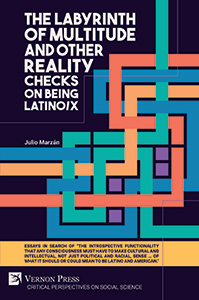
For more on subjects or themes touched upon here see my “The Labyrinth of Multitude and Other Reality Checks on Being Latino/x” (Vernon Press), available at https://vernonpress.com/book/1914 or at Amazon: https://www.amazon.com/Labyrinth-Multitude…/dp/1648896774
 Julio Marzán | J. A. Marzán